Thanks Keith and Ardeus. The added strength, obvious as it is, wasn’t something I thought about and all the other more subtle points are what I was looking for.
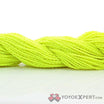
Finally got myself a wooden throw (by Spinworthy). I’ve been trying out some 50/50 coton poly strings from YYE since I don’t have access to 100% coton at the time and it seems to be doing the job.
Managing tension and response is a steep learning curve and besides stalls I’m not doing much at the moment. I’m working on kickflips next (nearly there).
And if anyone (in Europe) is looking for wooden fixies I know the person I bought this from has a couple brand new Fallen44 on sale
Cross-posting since it’s Friday - been sitting on this one for a while but too shy to share it.
Ever since learning about stalls, I’ve been trying to perfect a somersault roll off a brother trapeze, and after too many years, I finally have a consistent catch. It takes a delicate hand to land on the same side of the string without tipping. I practiced with a heavy Manta Ray first - it was easiest to balance on the string. Now I’ve upgraded to lighter throws.
Start slow and gentle. You’re probably used to throwing very hard, but fixed axle play requires a softer throw.
I think about stalls in two separate ways:
I am already in a mount with a sleeping yoyo and then I tug the yoyo to return, causing the loop of string to shrink around my nth
The yoyo is returning, and I “cut” my nth under the yoyo, interrupting the return
In stalls, the direction of winding matters. For a trapeze stall, the string should be below the yoyo, so your nth can pass between the yoyo and the string. For this, my video above is a bad example; in my final catch, the winding was on the wrong side but I used slack to make it work anyway.
On a regular trapeze stall you want your throwhand higher up than your non-throwhand. It makes keeping it on the string once it’s stalled a lot easier.















 , the
 Puddle Jumper


