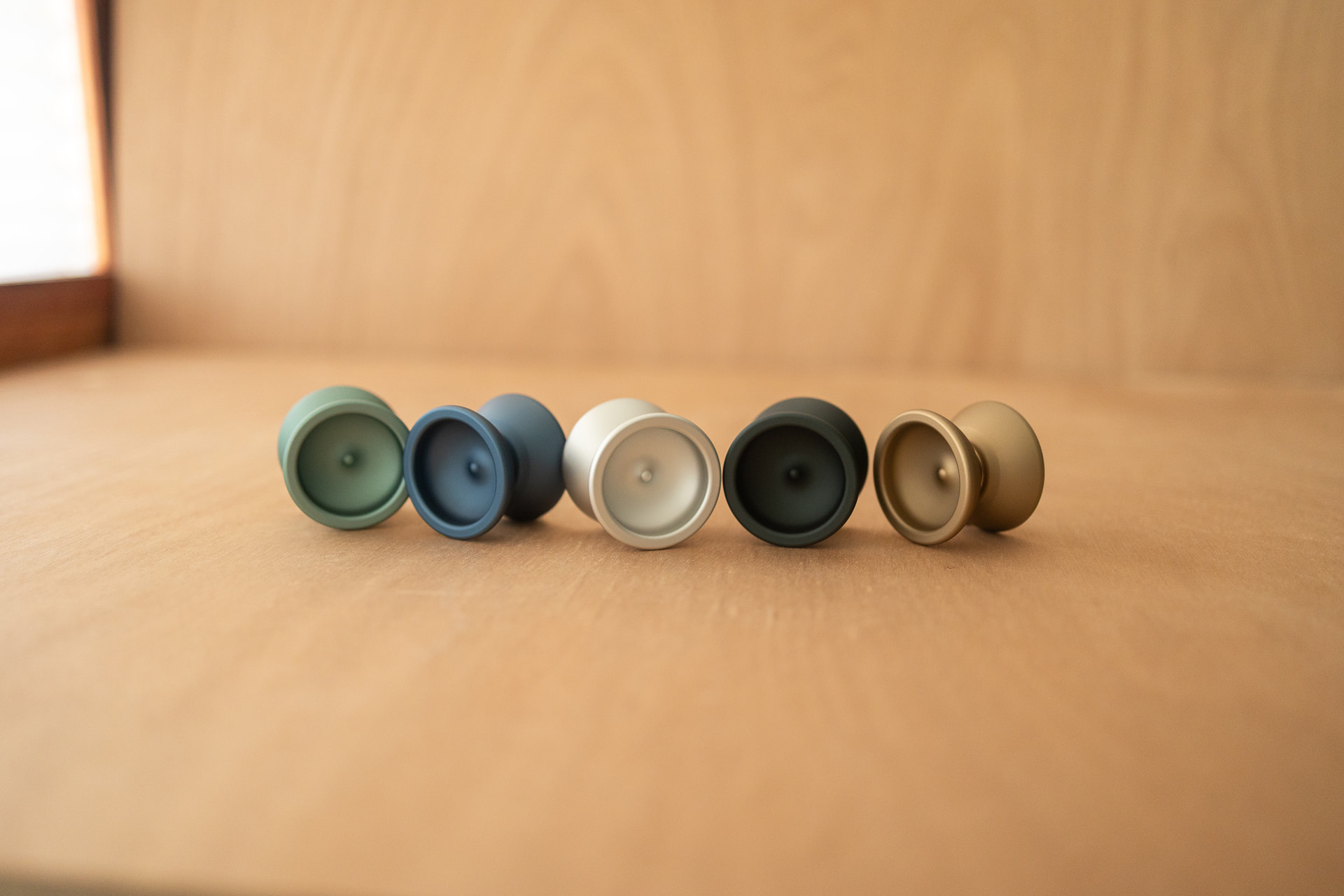
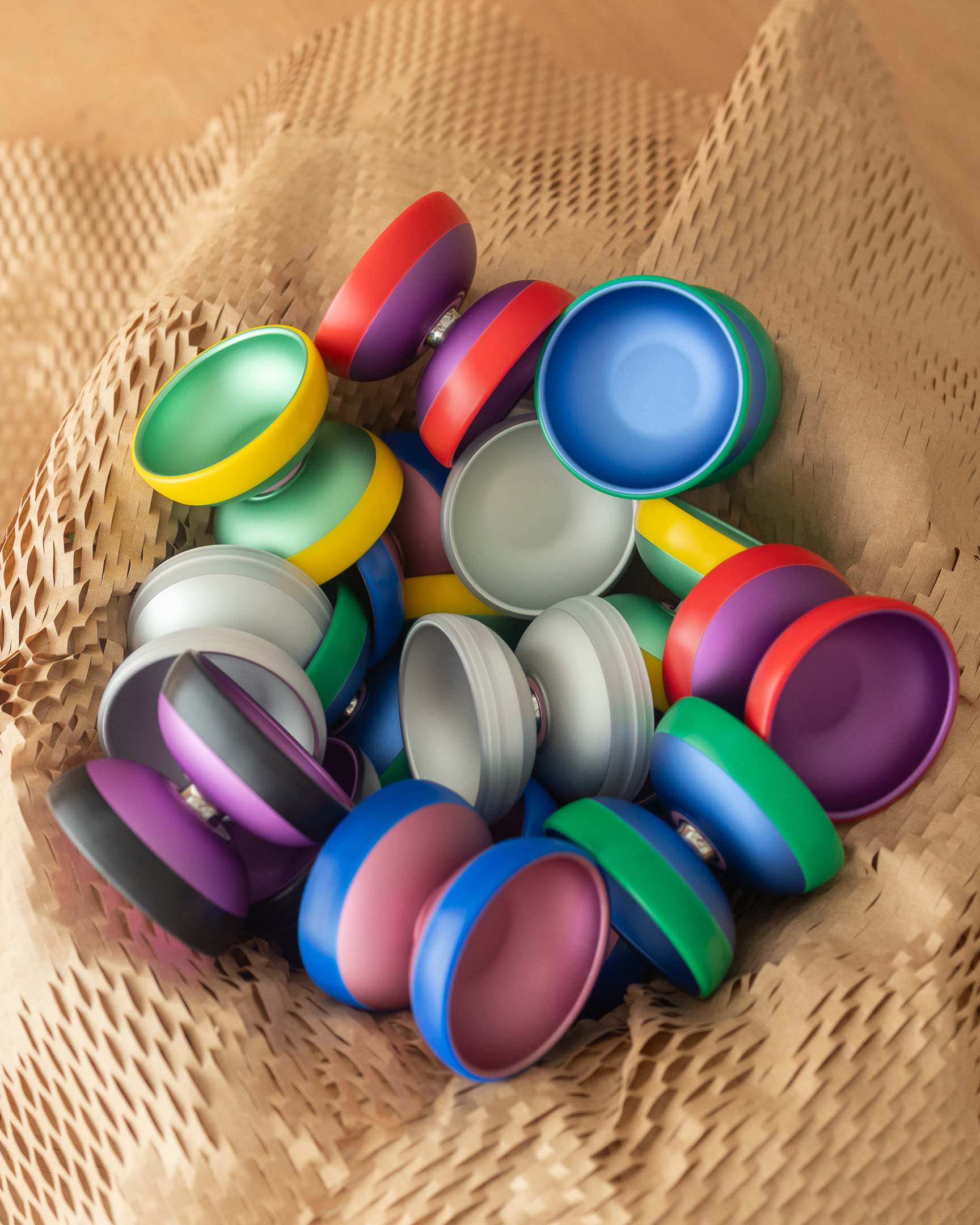
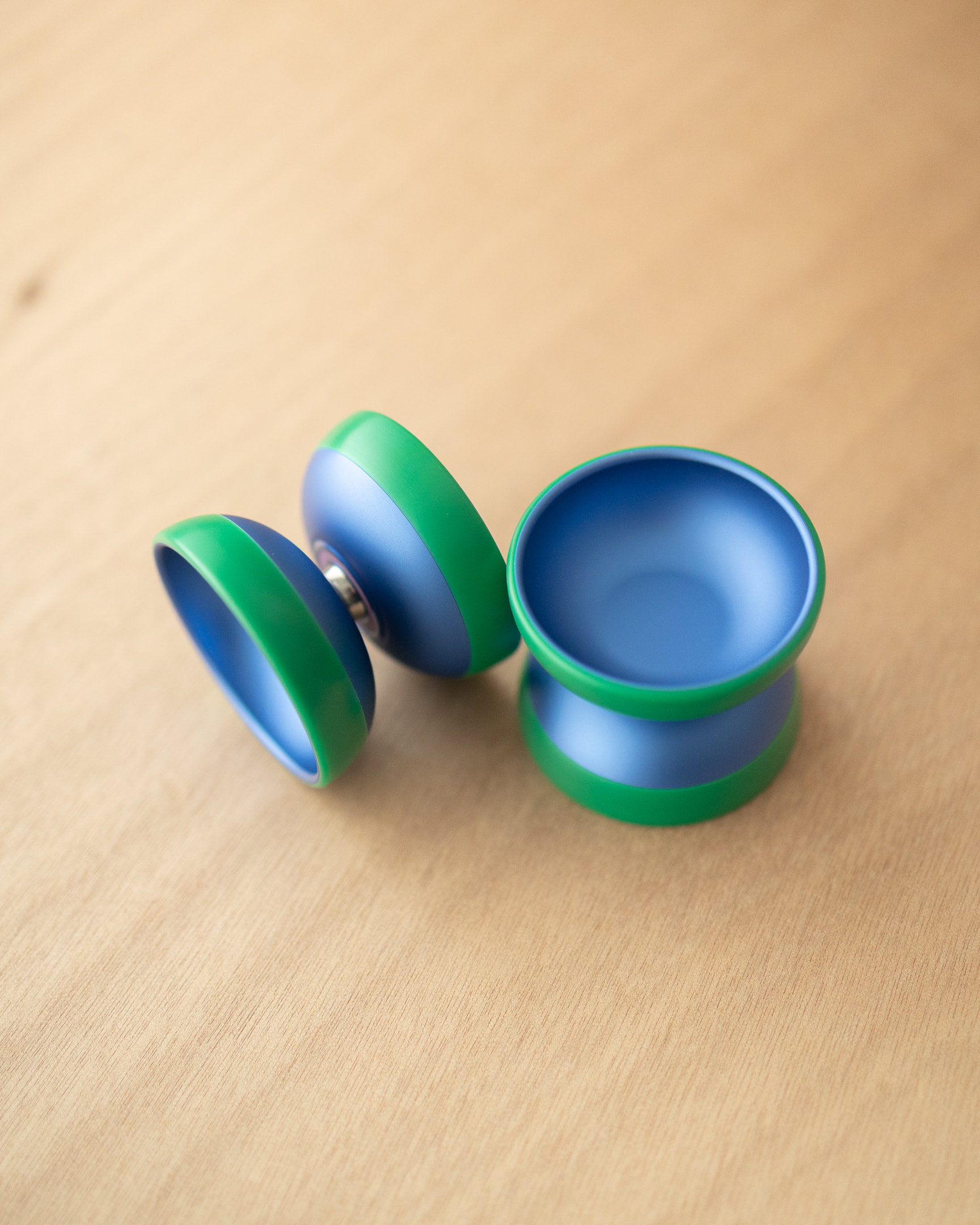
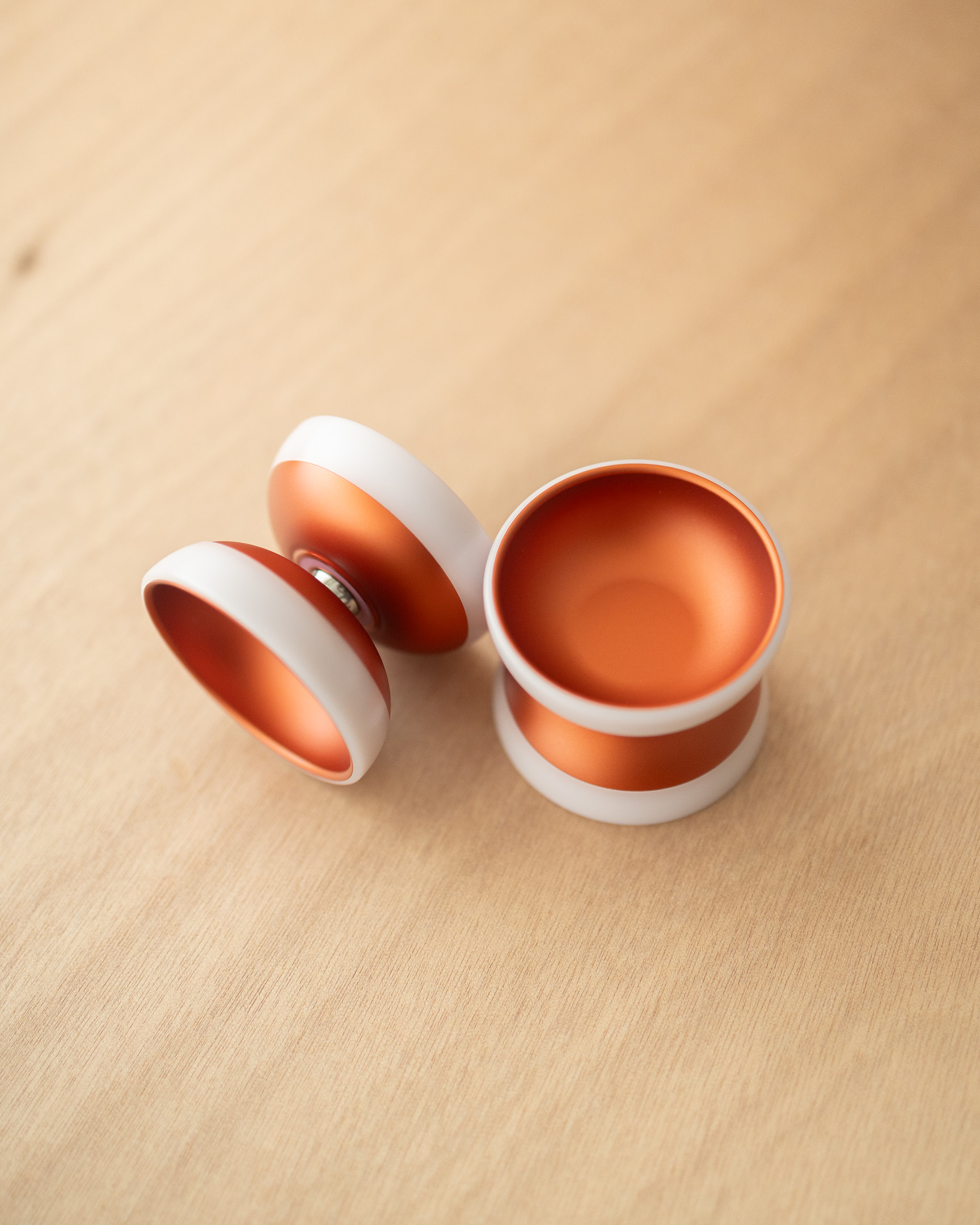
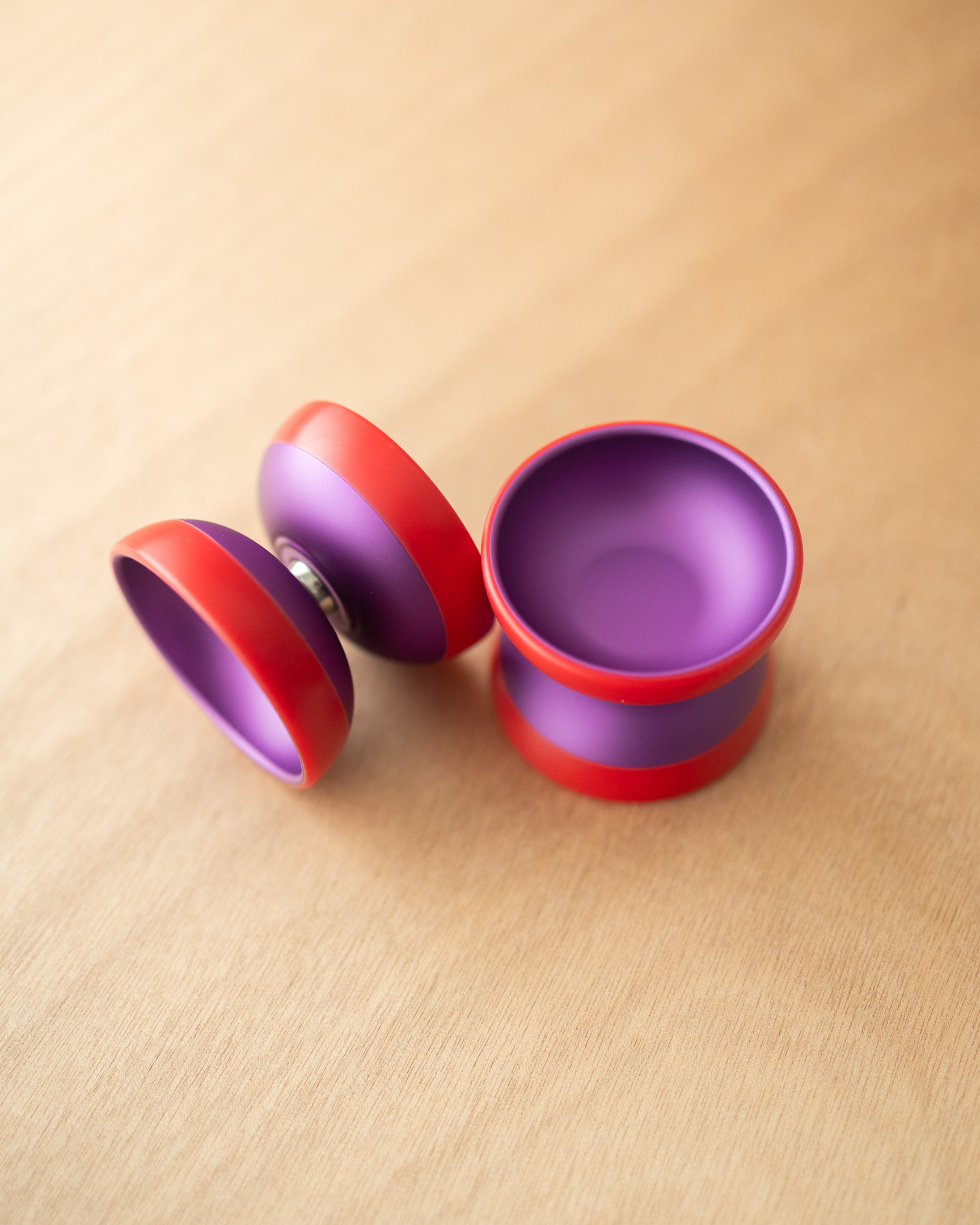
We’re kicking off the year in a big way — with the smallest ever member of the family.
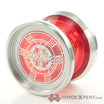
Welcome, Smol — Atmos Projects’ first release of 2026, and also our first ever undersized, 1:1 design release. It’s a worthy, unique sequel to the Hamr, and is the second signature model of Vladimir Glazkov.
**SPECS **
Diameter 46.0mm
Width 46.0mm
Weight 68.7g
Material 6061 Aluminium
The Smol has its beginnings shortly after the release of the Hamr, Vladimir Glazkov’s first signature model with Atmos Projects. At the time, the Hamr had taken off wonderfully — it was our first H-shaped model, and despite having taken certain risks (in departing from generally mainstream specifications and design priorities), it was extremely well received.
Later on in the year, we caught Tsukasa Takatsu’s glowing review of the Hamr, which delved deeply into material use, playfeel and performance, as well as the concepts and philosophies that Hamr represented — and we knew we did something right. The Hamr doesn’t bear any physical similarities to the rest of Atmos’ available lineup, but we quickly understood there were certain aspects of the Hamr that deserved to live on in other future designs.
Vladimir started toying with the concept of an aluminum version of the Hamr — but miniaturized, and with a 1:1 diameter-to-width ratio. Where the Hamr was technical and performance-oriented, Vladimir’s idea was that the Smol would be designed for fun, casual play — in his words, “playful, light, and inspiring”.
This came as a surprising challenge. For one, we had never gone into “mini” territority before. The smallest design we’ve ever put out — oddly enough — was the Hamr, which sported a 52mm diameter. Vladimir even suggested a diameter and width measurement of 46cm, citing key icons in the 1:1 (and analogous) spaces as references — such as the QuadFour, Chobi Gorilla and ClashCube by YoyoRecreation, or the Fern and Quail by A-RT — all of which had inspired and influenced Vladimir’s playstyle, despite embodying very distinct and unique qualities.
From a design perspective, making a sub-50mm model comes with unique challenges. Outside of the models mentioned above, the vast majority of the genre can sometimes feel like a gimmick — simply “miniaturizations” of popular, full-sized designs, rather than designs capable and distinct in their own right, or ones that truly capitalize on a small form factor. Additionally, the implications of going small are that power and stability are often compromised. A reduced diameter generally results in a greater-than-proportionate loss of moment-of-inertia, which can cause a design to lose power and tilt more easily. It is true that not all designs need to spin aggressively, or to be perfectly stable — but with smaller designs, these are often bugs, not intentional features.
As these conversations went on, we arrived at some clarity that for the Smol project to make sense, it had to embody Vladimir’s vision of an extremely fun and capable design, live up to the standards established by the Hamr, and importantly, not compromise on spin and stability.
Vladimir’s playstyle shifts between a flowy, condensed tech style, and a more brutalist, direct type of play. That reflects in what his priorities are in a design — power, but not at the expense of agility and mobility. To that end, the first course of action was nailing a weight distribution within these 1:1, 46mm x 46mm constraints that would result in that perfect, “Goldilocks” zone of playfeel.
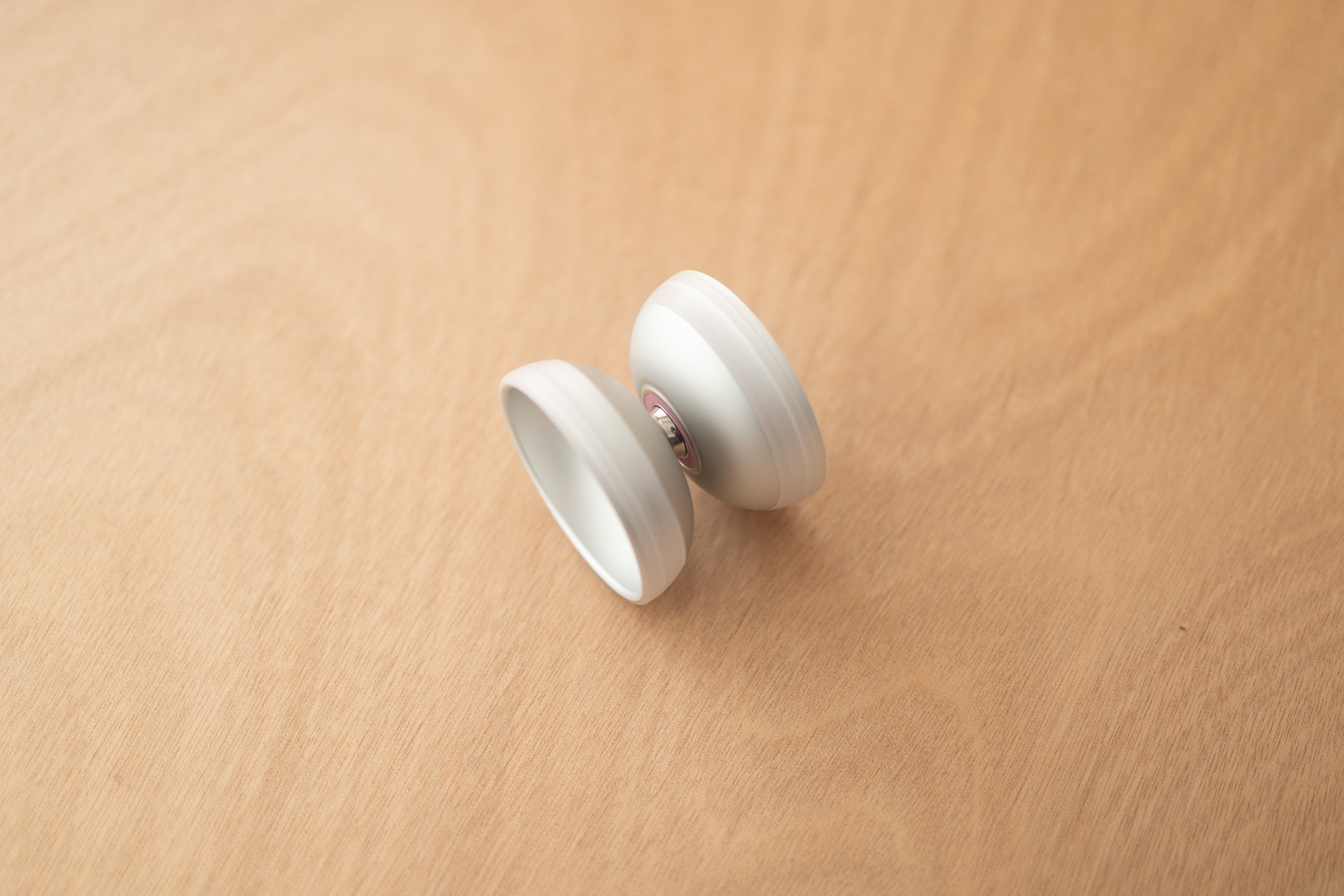
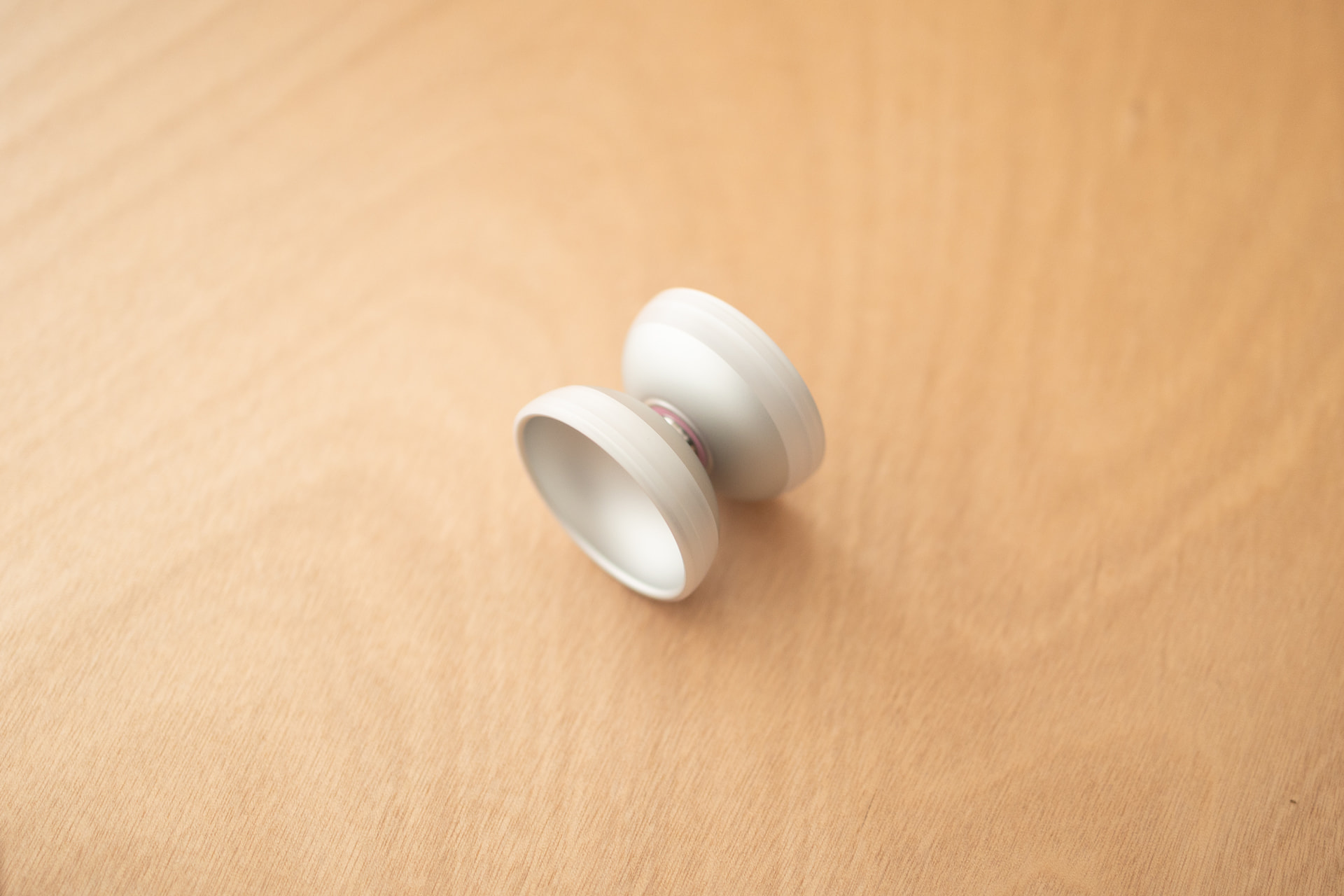
The Smol is primarily H-shaped, which allowed us to pack an enormous amount of mass in its rims. Visually, you can observe how the Smol’s rims actually constitute a majority of its overall physical body — even more so than the Hamr — and actually contains more than 70% of its overall mass. We also bumped up its overall weight to 68.7g. This was an intentional decision to overcome the drawbacks of a smaller diameter.
For those who pause slightly at the suggestion of a near-69g model that measures only 46mm in diameter, be assured — this does not make the Smol feel oddly overweight or rock-like. It feels entirely right and natural in play, if slightly more solid than light and airy.
The combination of overall mass and rim-biased distribution allows the Smol not only to get up to rotational speed quickly, but to also sustain spin for as long as a player needs.
The Smol’s playfeel is nuanced — it has the stability and spin of a mid-sized yoyo, and yet as a result of its physical smallness, it navigates tight corners very confidently. It’s less floaty than what we usually put out, to be sure, and has considerable torque and and presence. Behind its tiny physical footprint lies power, presence capability that we think will surprise many.
There’s a certain nostalgia to the way it plays, too — it personally reminds me of the 2007 Yoyofactory 888.
The Smol retains the brutalist curvature and design cues present in the Hamr, and from first glance it’s clear the lineage it emerges from. They’re unique from anything else we have in the Atmos lineup, and we love how they turned out here.
In Vladimir’s own words, “The first thing I notice right away is that it plays like a mid-sized yoyo, despite being small and cute. On the first throw, Smol really comes alive. It feels soft on the string, yet confident and solid. It can move fast or flow smoothly, following my movements effortlessly. If I want to speed up, it speeds up. If I want to slow down, it slows down. All of it stays stable and smooth. The longer I play, the more I get lost in freestyle. I’m not thinking about the next trick — I just let my hands move naturally. In that sense of freedom lies the real joy of playing Smol.”
We hope you enjoy this one.
—
The Smol is equipped with
Stratos Pads by Atmos
Type I Concave Bearings by Atmos
CloudWeave Micro by Atmos